


How to Build a Wedding Day Timeline That Actually Works (And Keeps You Stress-Free)

The real reason wedding days go sideways...
Here’s the truth no one tells you early enough: the thing that derails most wedding days isn’t bad weather, a late vendor, or even a missing boutonniere. It’s a timeline that was built way too tight.

When your schedule leaves zero room for real life—someone runs late, a zipper sticks, your aunt disappears right before family photos—the whole day starts to feel rushed. And suddenly, instead of soaking it all in, you’re watching the clock.
The good news? A stress-free wedding day isn’t about perfection. It’s about building a wedding day timeline that actually works—with breathing room built in from the start.
Let’s walk through how to do it right.
Start with your ceremony time and work backwards
If you remember one thing from this entire guide, make it this: your ceremony time is the anchor for your entire wedding day schedule.
Everything—getting ready, photos, transportation, even when you eat—should be built by working backwards from that moment.
Here’s what you need to know:
Most wedding ceremonies run about 20–30 minutes
Religious or cultural ceremonies can run 45–90 minutes, so talk to your officiant early
Guests typically arrive 30 minutes before the ceremony
Your venue contract usually gives you your access time and reception end time—this is your foundation
Once you lock in your ceremony time, you can start building a realistic wedding day order of events that flows naturally instead of feeling crammed.
The getting ready time trap (where timelines fall apart)
If wedding timelines had a “danger zone,” this would be it.
Getting ready almost always takes longer than people expect—and it’s the number one reason timelines start running behind before the day even really begins.
Here’s a realistic baseline:
Hair and makeup typically start around 9:00 AM for an average-sized bridal party
For a 4:00 PM ceremony, that 9:00 AM start time is pretty standard
Bridesmaids should be fully dressed before the bride
The bride should be scheduled in the middle or toward the end of hair and makeup—but not dead last for both
And here’s the rule that saves timelines everywhere:The 30/5 Rule
Add 30 extra minutes to your getting-ready timeline (yes, even if everything seems perfectly planned)
Plan to be completely ready 5 minutes before photos are scheduled to begin
This buffer is what turns chaos into calm.
For the rest of the wedding party:
Groomsmen should arrive 2–3 hours before the ceremony
Build in time for them to get dressed, relax, and take a few photos
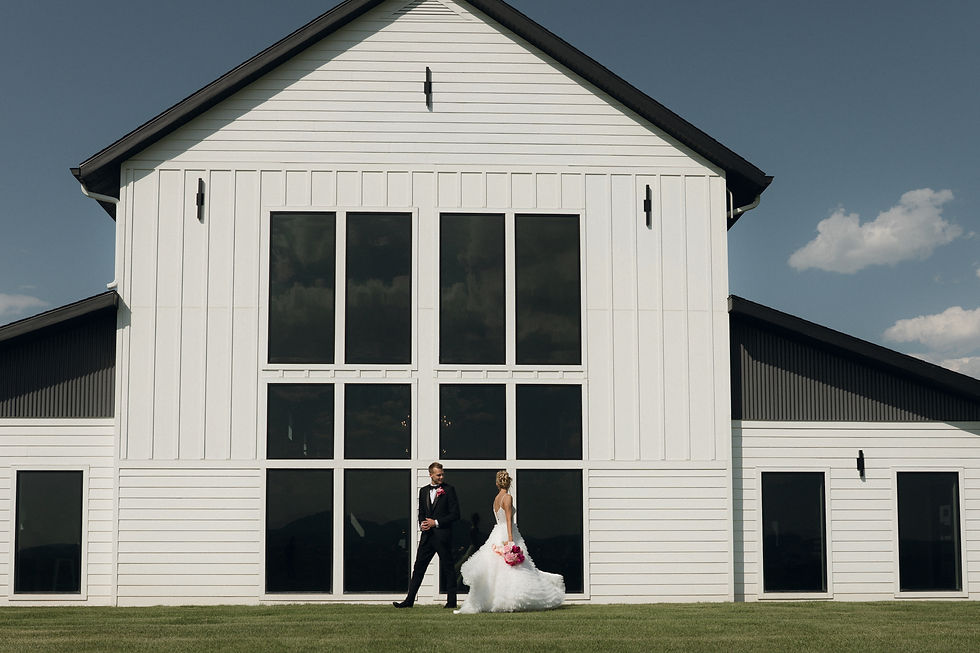
This is also where your venue can make a huge difference. When you can get ready on-site—like in a dedicated Bridal Loft and Groomsmen Lounge at a venue like The Barn at Aspen Acres—you eliminate travel time, reduce stress, and keep everyone exactly where they need to be.
No caravans. No “where is everyone?” texts. Just a smoother start to your day.
First look or no first look? (no wrong answer, just different timelines)
This is one of the most personal decisions you’ll make when building your wedding timeline—and there’s no right or wrong choice here.
Let’s break it down.
First Look
A private moment between the couple before the ceremony
Most portraits (couple, wedding party, some family) happen before the ceremony
You’ll likely free up 60–90 minutes after the ceremony
You can actually attend and enjoy your cocktail hour
Especially helpful for evening weddings with limited daylight
No First Look
You see each other for the first time at the altar
Keeps things traditional
Most portraits happen during cocktail hour
Requires a tighter post-ceremony schedule
Whichever route you choose, the key is this: build in buffer time.
Even the most perfectly planned photo list takes longer than expected. Giving yourself flexibility here keeps your day feeling relaxed instead of rushed.
A sample wedding day timeline (based on a 4 PM ceremony)
Let’s put it all together into a clean, easy-to-follow wedding timeline template. Think of this as your starting point—you can adjust based on your priorities, guest count, and overall vision.
9:00 AM — Hair and makeup begin
12:00 PM — Photographer arrives for detail shots
12:15 PM — Wedding party fully dressed
12:30 PM — Couple gets dressed + getting-ready portraits
1:30 PM — First look + wedding party portraits
3:30 PM — Guests begin arriving
4:00 PM — Ceremony (20–30 minutes)
4:30 PM — Cocktail hour
5:30 PM — Grand entrance + reception begins
5:45 PM — Dinner service
6:30 PM — Cake cutting
6:45 PM — Toasts + first dances
7:30 PM — Open dancing
11:15 PM — Grand exit
This is a classic barn wedding timeline that balances structure with flexibility—and most importantly, it gives your day room to breathe.
The buffer rule (your secret weapon)
If a stress-free wedding day had a magic formula, this would be it:
Add 15 minutes between every major transition.
Getting ready → photos
Photos → ceremony
Ceremony → cocktail hour
Cocktail hour → reception
Those small pockets of time absorb delays before they turn into stress.
A few more timeline-saving tips:
Assign one person as the official timeline keeper (planner, coordinator, or a super-organized friend)
Share your full wedding day schedule with every vendor at least a week before the wedding
Remind key family members the night before where they need to be for photos (this alone can save you 20 minutes)
These aren’t glamorous details—but they’re the reason your day actually flows the way you imagined it.
A warm (and honest) closing
Couples who build a realistic wedding day timeline don’t just stay on schedule—they actually experience their wedding.
They laugh more. They notice the little moments. They’re present.
Because they’re not rushing from one thing to the next or wondering what’s running late.
If you’re figuring out how to plan a wedding day that feels as good as it looks, your timeline is everything.
And the best part? You don’t have to figure it out alone.
At Aspen Acres, every couple is guided through a wedding day timeline that fits their vision, their priorities, and their people—so the day feels effortless from start to finish.
If you’re ready to start planning your own stress-free wedding day, you can explore more at blackhillsbarn.com.


Comments